










Avoid Road Test Mistakes: Top Class 5 Driving Tips You Need
Learn essential Class 5 driving tips to perform well during your road test. Avoid common errors, stay safe, and strengthen your driving skills with guidance from a professional training provider.

Preparing for your Class 5 road test is an important step in becoming an independent driver. Nervousness, small errors, or lack of structured preparation can affect your performance. The key is understanding what examiners observe and developing strong, safe driving habits.
In this guide, we’ll cover practical Class 5 driving tips that help you stay calm, focused, and well-prepared on test day — while building long-term safe driving skills.
Significance of Class 5 Driving Mastery
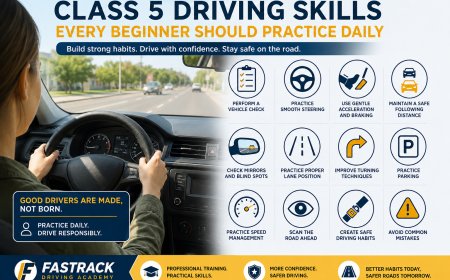
Mastering Class 5 driving is not just about obtaining a license. It’s about building awareness, responsibility, and lifelong road safety habits.


1. Improved Safety for You and Others
Safe driving is the foundation of responsible road behavior. Strong Class 5 training helps you:
-
Anticipate potential hazards
-
Maintain safe following distance
-
React appropriately in traffic situations

-
Understand right-of-way rules


New drivers statistically face higher road risks during their early driving phase, which makes structured training essential.
2. Stronger Confidence Behind the Wheel
Confidence comes from preparation — not luck.
When you understand:
-
Vehicle controls
-
Road signs
-
Lane discipline
-
Parking techniques
You feel more composed and in control. A professional training provider helps reinforce correct techniques through guided practice.
3. Avoid Common Road Test Mistakes
Many candidates struggle due to small but repeated errors, such as:
-
Incomplete stops at stop signs
-
Missing shoulder checks
-
Incorrect lane positioning
-
Poor mirror observation
-
Rushing through turns
Focused practice reduces these mistakes significantly.
4. Develop Lifelong Safe Driving Habits
The habits you build during Class 5 training stay with you for years.
Skills like:
-
Defensive driving
-
Speed control
-
Proper signaling
-
Smooth braking
Become automatic over time, helping you stay safer on the road.
5. Greater Independence and Responsibility
Becoming a licensed driver increases mobility and independence. Whether commuting to work, attending classes, or managing daily responsibilities — strong driving skills make life easier and more flexible.
Practical Steps to Avoid Road Test Mistakes
Preparation is more than memorizing rules. It requires consistent practice and awareness.
Step 1: Understand Test Requirements
Know the maneuvers that are commonly evaluated, such as:
-
Lane changes
-
Parallel parking
-
Three-point turns
-
Controlled intersections
-
Emergency stops
Clarity reduces anxiety.
Step 2: Practice in Real Road Conditions
Drive in:
-
Light and moderate traffic
-
Different weather conditions
-
Various times of day
This improves reaction time and decision-making ability.
Step 3: Focus on Observation Skills
Examiners closely observe how well you:
-
Check mirrors
-
Perform shoulder checks
-
Maintain lane discipline
-
Anticipate pedestrian movement
Observation should become a habit, not a forced action.
Step 4: Master Low-Speed Maneuvers
Parking and slow-speed control require patience and precision. Practice repeatedly in safe, open areas until you feel fully comfortable.
Step 5: Manage Nerves on Test Day
It’s normal to feel nervous. To stay composed:
-
Take deep breaths
-
Listen carefully to instructions
-
Focus on one action at a time
-
Avoid rushing
Calm drivers make better decisions.
Step 6: Learn From Practice Sessions
Every training session is a learning opportunity. Identify weak areas and work on them gradually. Improvement comes from consistency, not pressure.
Your Class 5 road test is a step toward responsible and independent driving. With proper preparation, structured guidance from a professional training provider, and consistent practice, you can approach your road test confidently and perform at your best.
Strong driving skills are not built overnight — they are developed through focus, patience, and safe habits.
What's Your Reaction?